Thinking about adding a backyard cottage, converting your garage, or creating a small rental on your Suisun City property? You are not alone. ADUs are popular across Solano County for extra living space and potential income, but the rules can feel confusing. This guide breaks down California’s baseline laws, what to check locally in Suisun City, and the simple steps to get your permit approved. Let’s dive in.
What an ADU is in California
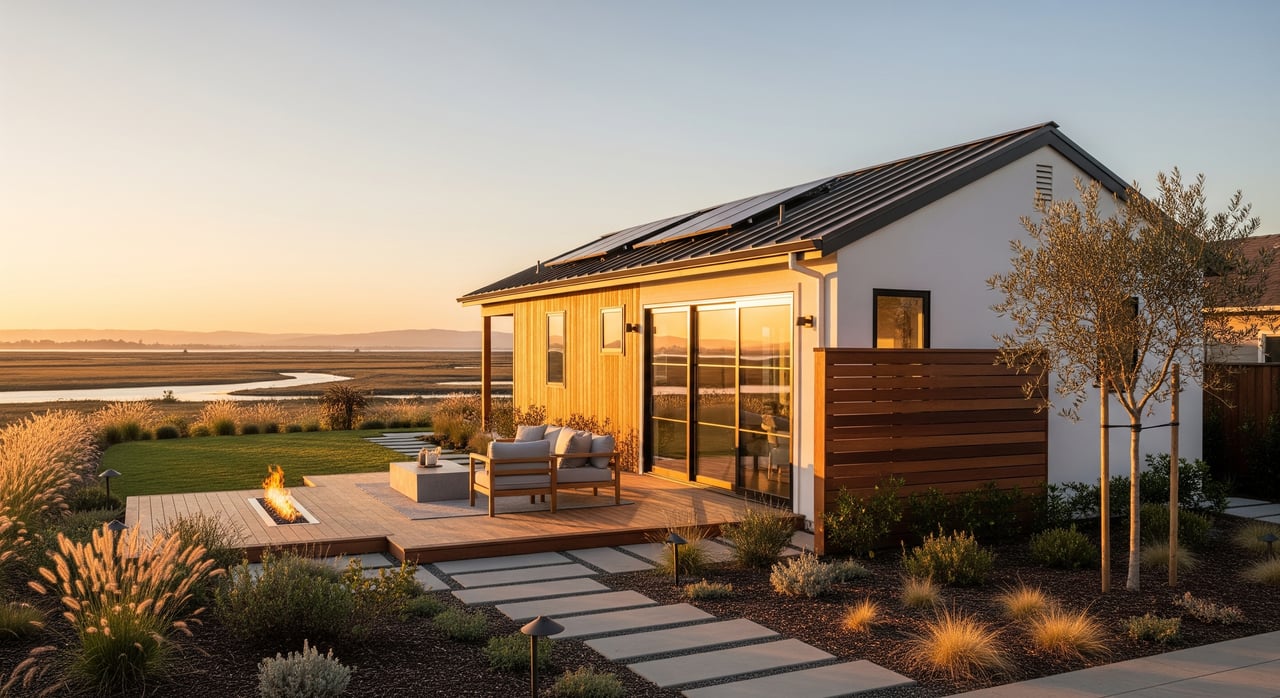
Accessory dwelling units are self-contained homes on the same lot as a primary residence. They can be detached backyard homes, attached additions, or conversions of existing space like a garage or basement. There is also a smaller category called Junior ADUs created within an existing or proposed single-family home.
State law gives you a strong baseline right to build an ADU if your plans meet objective standards. Most compliant projects receive ministerial approval, which means no public hearing and a clear review timeline. Your ADU must still meet California Building Standards Code requirements for safety, energy, and habitability.
State rules that shape your project
State law creates guardrails that every city, including Suisun City, must follow:
- Ministerial review: Cities must process qualifying ADUs through objective, staff-level review within a set timeframe.
- Owner-occupancy: Many new ADUs cannot be conditioned on you living on-site. Confirm current local practice.
- Parking: Cities have limited power to require off-street spaces. No replacement parking can be required if you convert an existing garage or parking space to an ADU. Common exemptions include ADUs within one-half mile of public transit.
- Impact and connection fees: Fees are limited and must be proportional. Smaller ADUs under a common 750 square foot threshold are often exempt from certain impact fees.
- Multifamily options: ADUs can be added on some multifamily parcels, including conversions of existing spaces.
If local code is silent or more restrictive than state law on key items, the state baseline usually governs.
Suisun City: what to confirm locally
City rules implement the state framework and can affect layout, size, and design. Before you draft plans, confirm the following with Suisun City’s Planning and Building staff.
Where ADUs are allowed
- Verify which zoning districts permit ADUs. Many cities allow them anywhere residential uses are allowed.
- Ask about overlay areas or historic districts that may require extra review.
Lot standards and dimensional controls
- Minimum lot size or density: Check whether your lot size affects the type of ADU you can build.
- Maximum size: State law sets overall limits by type, and the city may set caps within that range. Confirm the local maximum for attached and detached ADUs.
- Setbacks and coverage: Ask about side and rear setbacks for detached ADUs and whether lot coverage or floor-area ratio limits apply.
Parking requirements and exemptions
- Parking need: Confirm if your site qualifies for a state exemption, such as proximity to public transit.
- On-site solutions: If parking is required, ask whether tandem parking is allowed.
- No replacement parking: If you convert an existing garage or parking space to an ADU, cities commonly cannot require replacement parking under state law.
Owner-occupancy and rental rules
- Owner-occupancy: State law limits when cities can require you to live on-site. Verify Suisun City’s current policy.
- Short-term rentals: If you plan to use an ADU for short-term rental, ask the city about local short-term rental rules, any registration requirements, and transient occupancy tax.
Fees and utility connections
- Plan-check, permit, and inspection fees: Request a fee estimate for your scope.
- Impact fees: Ask whether impact fees apply to your ADU size and how they are calculated.
- Utilities: Confirm whether separate metering is required, how water and sewer connections are handled, and any capacity or upgrade costs.
Design review and historic resources
- Ask whether your neighborhood requires design review or if your property is in a historic district that triggers extra steps.
Local incentives or program options
- Check for any pre-approved plan sets, fee reductions, or expedited review that could speed your timeline.
Step-by-step: your Suisun City ADU checklist
Use this as a practical roadmap and adjust based on your lot and ADU type.
- Preliminary research
- Confirm your zoning and any overlays for the parcel.
- Choose your ADU type: detached, attached, conversion, or Junior ADU.
- Note potential constraints: utility capacity, easements, and any HOA rules.
- Pre-application meeting
- Strongly recommended. Meet Planning and Building staff to review setbacks, parking, height, and likely fees.
- Ask about pre-approved plans and any common corrections that slow approvals.
- Prepare your plans
- Site plan with property lines, setbacks, structures, driveway, and utilities.
- Floor plans, elevations, roof plan, and materials.
- Utility plan for water, sewer, electrical, and gas. Show any meter changes.
- Title 24 energy compliance forms and any soils or grading reports if needed.
- For conversions, include photos and proof of existing conditions.
- Submit applications
- ADU application for planning review (ministerial if standards are met).
- Building permit application and plan check.
- Pay plan-check and permit fees. Ask about impact or connection fees if applicable.
- Plan review and corrections
- Expect one or more plan-check cycles focused on building code, energy, and site layout.
- Respond quickly and completely to keep your review on track.
- Construction and inspections
- Build to the approved plans. Schedule inspections for foundation, framing, plumbing, electrical, mechanical, and final.
- Final approval and occupancy
- Secure final sign-off and your certificate of occupancy or final permit close-out before you move in or rent the ADU.
Timeline: what to expect
- Pre-application meeting: about 1 to 4 weeks to schedule.
- Design and plans: several weeks to a few months, depending on complexity and whether you use pre-approved plans.
- City review: qualifying ADUs are reviewed ministerially with a statutory decision timeline that is commonly about 60 days from a complete application. Building plan-check cycles can add several weeks depending on corrections and workload.
- Construction: a garage conversion can be faster; a new detached ADU typically takes several months.
Cost factors to budget
While every project is different, plan for:
- Design, engineering, and energy compliance documentation.
- City plan-check, building, and inspection fees.
- Impact or utility connection fees if your ADU size triggers them.
- Utility upgrades such as electrical panel capacity or water/sewer connections.
- Construction and contingency.
Ask Suisun City for a fee estimate early in your process and confirm how fees scale with ADU size.
Tips to avoid delays
- Start with a pre-application meeting to align on setbacks, size, and parking before drafting plans.
- Submit a complete package: clean site plan, elevations, utility info, and energy forms.
- Respond to plan-check comments quickly and document all communications with staff.
- If in an HOA or a special district, obtain those approvals in parallel.
Where to start in Suisun City
- Confirm your parcel’s zoning and whether ADUs are permitted by right.
- Request the city’s current ADU handout or checklist and typical review timelines.
- Ask about short-term rental rules, business license requirements, and transient occupancy tax if you plan to host.
- Coordinate with local utilities on meter and connection requirements.
Ready to explore an ADU for more living space or rental income in Suisun City? If you want a local, hands-on guide for feasibility, timelines, and next steps, connect with Carla Shaheed. Carla’s Solano County experience helps you move from idea to approved plans with confidence.
FAQs
Are ADUs allowed on single-family lots in Suisun City?
- State law strongly supports ADUs on single-family lots, but you should confirm your zoning and any overlays with Suisun City Planning.
Do I need to live on-site if I build an ADU in Suisun City?
- State rules generally limit local owner-occupancy requirements for new ADUs; verify Suisun City’s current policy before you apply.
How much parking does my Suisun City ADU need?
- Parking can be limited or not required under state exemptions, such as being within one-half mile of transit; confirm whether your parcel qualifies and if tandem parking is allowed.
Can I convert my garage to an ADU in Suisun City without replacing parking?
- State law commonly prevents cities from requiring replacement parking when a garage or parking space is converted to an ADU; confirm structural and design requirements with the city.
What fees should I expect for a Suisun City ADU?
- Budget for plan-check, building, and inspection fees; some impact and connection fees may apply based on size, with limits for smaller units often under 750 square feet.
Can I use my Suisun City ADU for short-term rentals like Airbnb?
- Check Suisun City’s short-term rental rules and transient occupancy tax requirements; some uses may require registration or may be restricted.
What documents do I need to submit for a Suisun City ADU?
- Typical submittals include site and floor plans, elevations, utility information, Title 24 energy forms, and any required reports such as soils or grading for new foundations.