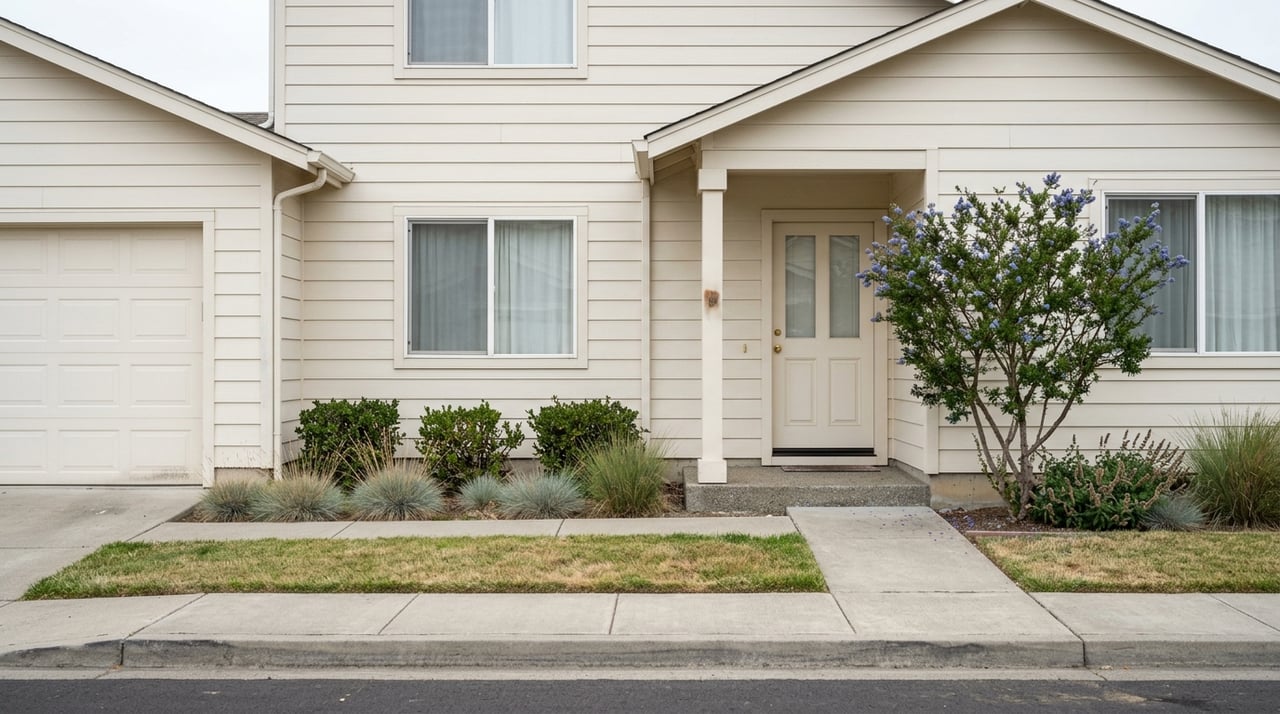
Why San Pablo CA Home Prices Tell Different Stories
August 27, 2026
August 27, 2026
Open three tabs and search "San Pablo home prices" and you will get three different answers, moving in three different directions. One site says the market gained more than 10 percent over the past year. Another says values slipped by more than 3 percent. A third says the price per square foot is down 4 percent. Nobody is lying. Nobody made a typo. The numbers disagree because San Pablo is small enough that its housing market cannot produce a stable median, and because the city itself is not waiting around for that median to sort itself out before it starts changing what San Pablo is worth.
If you are comparing San Pablo to other Contra Costa cities on price alone, you are reading noise as signal. Here is what the noise actually looks like, and what to watch instead.
Depending on which source you check and which month it pulls from, San Pablo's housing data reads like three separate cities.
Two of those numbers land within $35,000 of each other. The trend lines point in opposite directions. That is not a rounding error. It is what happens when a market this small gets measured by tools built for markets ten times its size.
San Pablo is home to roughly 29,000 people, and in a typical recent month the city has sold somewhere between 6 and 10 homes total, houses, condos, and townhouses combined. New listings recently numbered just 13 for the entire city, with a median list price of $530K and a typical time on market of 61 days.
That volume matters more than any single price point. When a city moves hundreds of homes a month, one unusual sale barely nudges the median. When a city moves single digits, one unusual sale is the median. A single high-end sale on a bay-view lot or a single distressed cash sale on a fixer can swing a monthly figure by tens of thousands of dollars, and the next month's swing can run the other direction entirely.
You can see this happening inside a single data source. In December 2025, one tracker's own numbers showed the average San Pablo house price rising 12.7 percent year over year while its median sale price rose only 4.0 percent, with just 7 homes sold that month, down from 9 the year before, and typical time on market stretching from 28 days to 55. When the average and the median from the same source pull apart that far, in a market that thin, a handful of outlier sales are doing the pulling. That is not a market correcting. That is a market too small for the statistic to hold still.
None of this means San Pablo is unstable or risky to buy into. It means the monthly headline number is close to useless for planning a purchase or a sale here, and a buyer or seller who anchors to last month's median is anchoring to noise.
While the portals argue with themselves, the City of San Pablo has been moving on a different timeline entirely. In late January 2026, the city announced a new Marketing and Branding Program for Economic Development and Housing, built with the firm Tripepi Smith around the brand statement "Growing Forward, Grounded in Community." The strategy does not treat San Pablo as one undifferentiated city. It builds out corridor-level sub-brands, distinct messaging for distinct commercial districts, so the city can speak specifically to the opportunity in one corridor without diluting it with the story of another.
"San Pablo's new branding program reflects our commitment to reinvestment, community pride, and a thriving local economy."
That line came from San Pablo Mayor Elizabeth Pabon-Alvarado when the program launched, and it is a useful way to think about San Pablo as a buyer too. The citywide median is one thing. What is happening corridor by corridor is another, and it is the more honest picture.
The clearest example is Rumrill Boulevard. The corridor's southern stretch, between Brookside Drive and Costa Avenue, has been formally designated a Priority Development Area, the kind of transit-adjacent zone the region earmarks for new homes, jobs, and community investment. City planning materials treat Rumrill's old industrial footprint as an asset rather than a liability, pointing to open parcels along the corridor that most of San Pablo simply doesn't have room for anymore, and positioning the street for a new chapter after its recent upgrades.
That framing isn't aspirational marketing sitting on top of nothing. The $19 million Rumrill Boulevard Complete Streets project is already built, funded through a mix of state, regional, and even private industry partners along the corridor. The project reworked 1.7 miles of Rumrill with protected bike lanes, better lighting, wider sidewalks, and stormwater upgrades, and it has since been recognized as a National APWA Project of the Year in the Small Cities and Rural Communities category, after reporting a 75 percent drop in bike and pedestrian incidents on the corridor.
Away from Rumrill, the city's own project tracker shows a steady drip of approved commercial development along San Pablo Avenue and elsewhere: a new 42,000-square-foot San Pablo Police Department headquarters approved for a site across from City Hall, a Pollo Campero approved for 13280 San Pablo Avenue, a new 5,158-square-foot retail building with four tenant spaces at 14535-14555 San Pablo Avenue approved in 2025, an expanded Extra Space Storage facility currently under construction, and a new gymnasium and music center approved at Salesian College Preparatory. None of these is a headline event on its own. Together, they describe a city adding retail, civic, and institutional square footage in the same period its housing data can't agree with itself.
Contra Costa County's countywide median sale price ran $837,488 as of May 2026. San Pablo's own May 2026 median sale price, at $564,662, sits more than $270,000 below that, roughly a third less than the county typical. That gap is the real number worth carrying into a comparison with Richmond, El Cerrito, or San Pablo's other neighbors. It is more durable than any single month's swing, because it reflects where San Pablo sits in the county's price tier using the same measurement on both sides, not what happened to close in the last 30 days.
The corridor investment doesn't promise a fast payoff either. The Rumrill Priority Development Area's own projections call for roughly 22 new households and 194 new jobs by 2040, a slow, incremental build-out rather than a boom. That is worth knowing before anyone tells you Rumrill is about to transform overnight. It is repositioning, not reinvention, and it is happening on a fourteen-year runway.
If you are shopping San Pablo on price alone, the monthly median will keep contradicting itself for the same structural reason it does today: too few sales for the number to hold still. If you are shopping San Pablo on trajectory, the more reliable read is the corridor plan, the completed streets project, and the approved commercial pipeline, because those don't reset every time a single house closes.
Is San Pablo's housing market rising or falling right now? Depending on the source and the month, you can find evidence for both, and that is the point of this piece. Treat any single month's citywide figure as unreliable in a market this thin, and look instead at multi-month trends and corridor-specific activity.
What is the Rumrill Corridor Plan, and does it affect home values today? It is a City of San Pablo planning effort covering the southern stretch of Rumrill Boulevard, layered on top of an already-completed $19 million streets project and a formal Priority Development Area designation. Its household and job growth projections run out to 2040, so its effect on values is a long-term consideration, not an immediate one.
Does San Pablo's lower median mean lower quality inventory? No. It reflects San Pablo's position within Contra Costa County's price tiers, not the condition or character of its housing stock. Comparing San Pablo to countywide medians is useful for budgeting, not for judging a neighborhood.
San Pablo's numbers are going to keep looking messy from month to month, and that messiness is a feature of a small market, not a warning sign. If you want help reading past the noise, whether that means figuring out what a specific corridor is actually worth right now or timing a purchase around what the city is investing in rather than what last month's median said, Carla Shaheed works Contra Costa cities like San Pablo every day and can walk you through what the data isn't telling you on its own. Work With Carla.

Monthly Recap
Solano County Highlights: September 2026

Life Transition Real Estate
Expert Guidance for Probate, Divorce, Downsizing, Estate Sales & Other Major Life Transitions

Real Estate

As a Solano County Real Estate expert with unparalleled industry knowledge, experience, and local expertise, I can help you get the best deal when buying or selling a home.